

Chinese Translation and Interpreting
1. Program Objectives
Upon completion of the Chinese Translation and Interpreting program, graduates will have acquired the following knowledge and competencies:
-
A solid foundation of general education and disciplinary knowledge in Chinese Language Studies.
-
A thorough understanding of the fundamental principles of Chinese phonetics and phonology, enabling them to refine their pronunciation and improve interpreting performance.
-
A sound knowledge of Chinese semantics and semantic analysis techniques, allowing them to accurately translate and interpret a wide range of texts.
-
An understanding of the relationship between language and culture, enabling effective communication in intercultural and multilingual environments.
-
Comprehensive knowledge of the Chinese language and the ability to apply it professionally in translation and interpreting. Graduates will possess a strong understanding of translation theories and broad linguistic knowledge, enabling them to translate various types of documents between Chinese and Vietnamese with accuracy and professionalism.
-
Specialized knowledge and practical skills in translation and interpreting to perform professional translation and interpreting tasks effectively.
-
The ability to use Chinese in tourism-related professions, supported by a solid understanding of the history, culture, society, and economy of Vietnam, China, and other Chinese-speaking regions.
With the rapid growth of the economy in recent years, the demand for professionals proficient in Chinese has continued to increase significantly. Recognizing the promising career prospects in this field, Duy Tan University has developed the Chinese Translation and Interpreting program to educate highly qualified graduates equipped with strong Chinese language proficiency and professional competencies.
Students enrolled in the program will:
-
Acquire comprehensive knowledge of Chinese writing systems, phonetics, vocabulary, and grammar.
-
Develop an in-depth understanding of the nature, functions, origins, and historical development of the Chinese language and Chinese culture.
-
Achieve advanced proficiency in all four language skills—Listening, Speaking, Reading, and Writing—with a target of HSK Level 5 or higher, equivalent to CEFR C1.
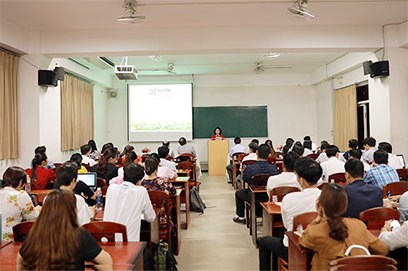
Many students choose to pursue the Chinese Language program at Duy Tan University.
In addition to emphasizing specialized knowledge and professional competencies, Duy Tan University is committed to developing students' essential soft skills, including communication, problem-solving, teamwork, leadership, and public speaking, preparing graduates for success in today's dynamic global workplace.
2. Career Objectives
Duy Tan University maintains academic partnerships with universities in China, providing students with opportunities to participate in exchange programs, transfer studies, faculty and student exchanges, cultural exchange activities, and scholarship programs.
Upon graduation, students are equipped with the knowledge, language proficiency, and professional skills required for a wide range of career opportunities, including:
Translator / Interpreter / Editor
Graduates are able to:
-
Work independently as professional translators or interpreters.
-
Translate written documents and provide interpreting services during meetings, negotiations, and other bilingual communications.
-
Work as editors for publishing houses producing Chinese-language publications.
-
Meet the communication needs of government agencies, private enterprises, multinational corporations, and international organizations across economic, social, and commercial sectors.
Office Secretary / International Relations Assistant / Tour Guide
Graduates are qualified to:
-
Work in foreign-invested enterprises, joint ventures, or Vietnamese companies engaged in international cooperation.
-
Support international relations, business development, import–export operations, tourism, and partnerships with Chinese-speaking clients and organizations.
-
Participate in negotiations, business meetings, contract preparation and administration, international guest reception, and tour organization.
-
Perform professional tasks requiring strong spoken and written Chinese communication skills.
Research and Teaching
Graduates may also:
-
Pursue postgraduate studies and develop careers as researchers or specialists in Chinese language and linguistics.
-
Become Chinese language instructors after completing the required pedagogical training and teaching certification.