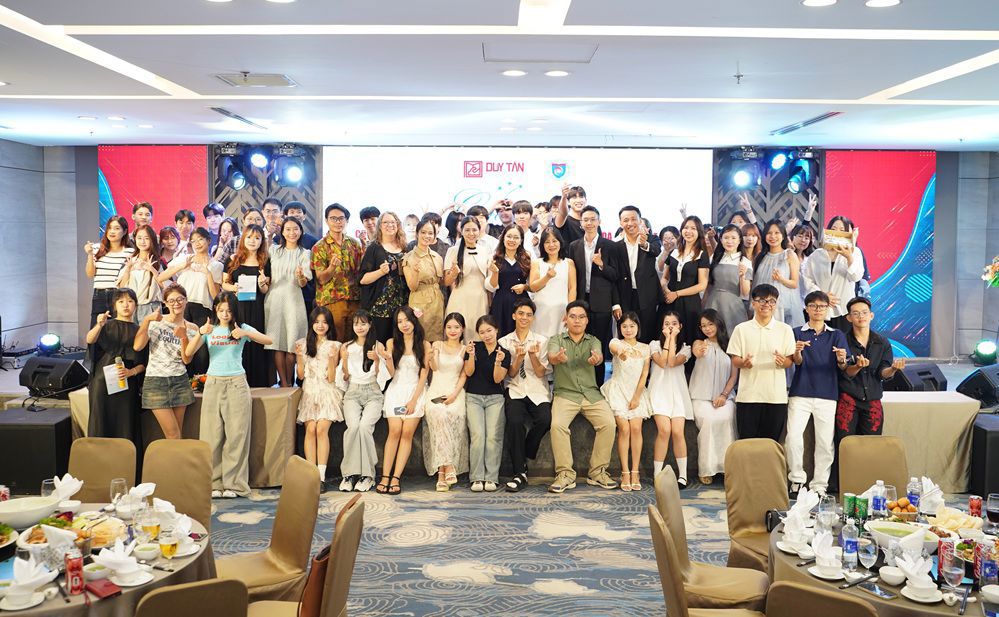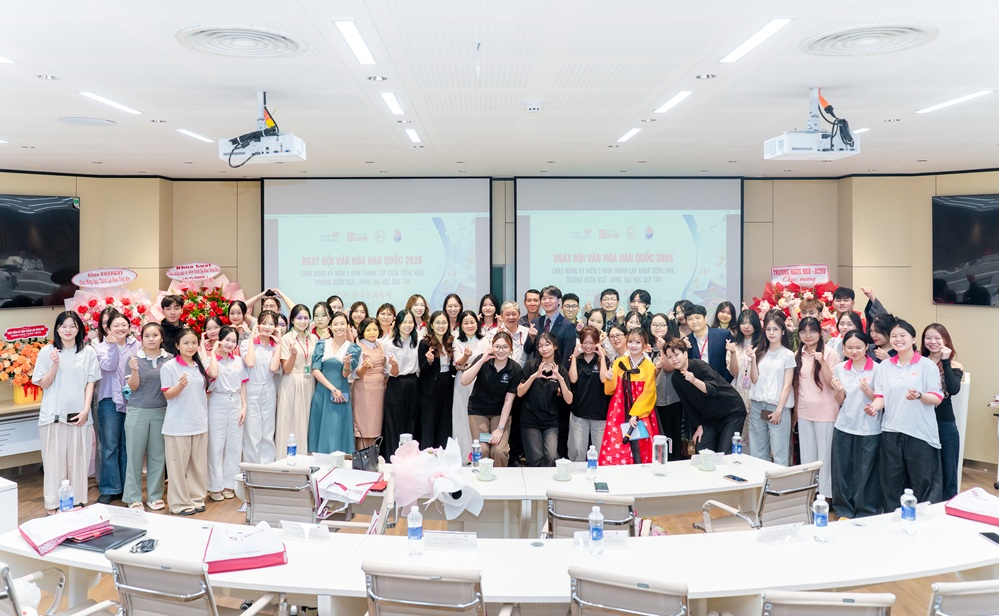
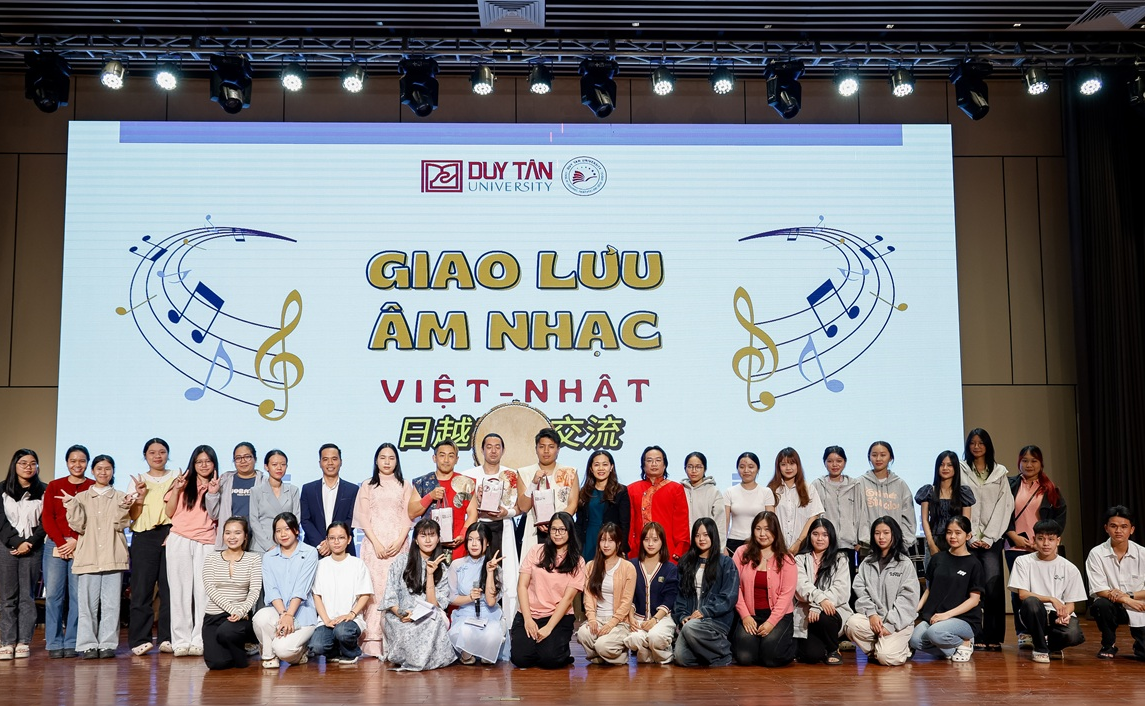
On the afternoon of December 7, 2025, the Japanese Language Faculty at the University of Languages and Social Sciences (ULSS), Duy Tan University, organized the "Vietnam-Japan Musical Exchange" program. The event was attended by artists from Japan, university representatives, partner organizations, and a large number of students. This program is considered a highlight in the Japanese Language Faculty's series of cultural exchange activities, contributing to fostering academic connections and enhancing mutual understanding between students of the two countries.
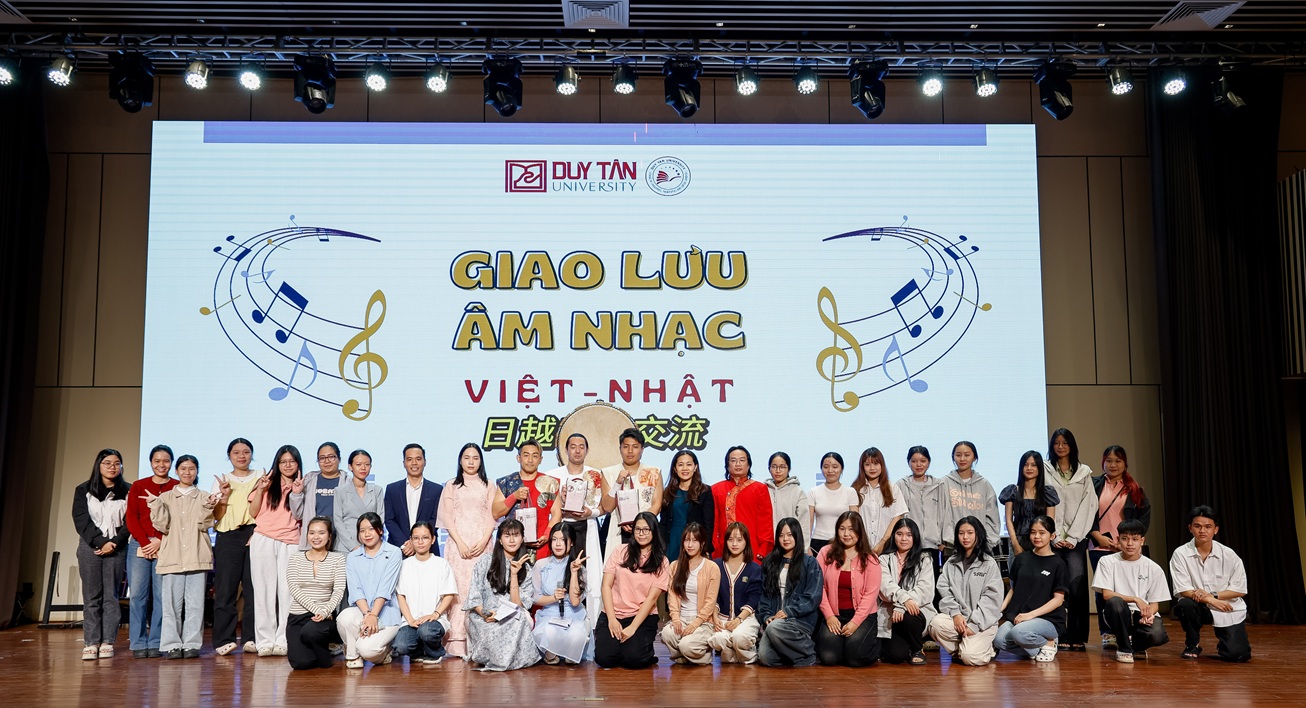
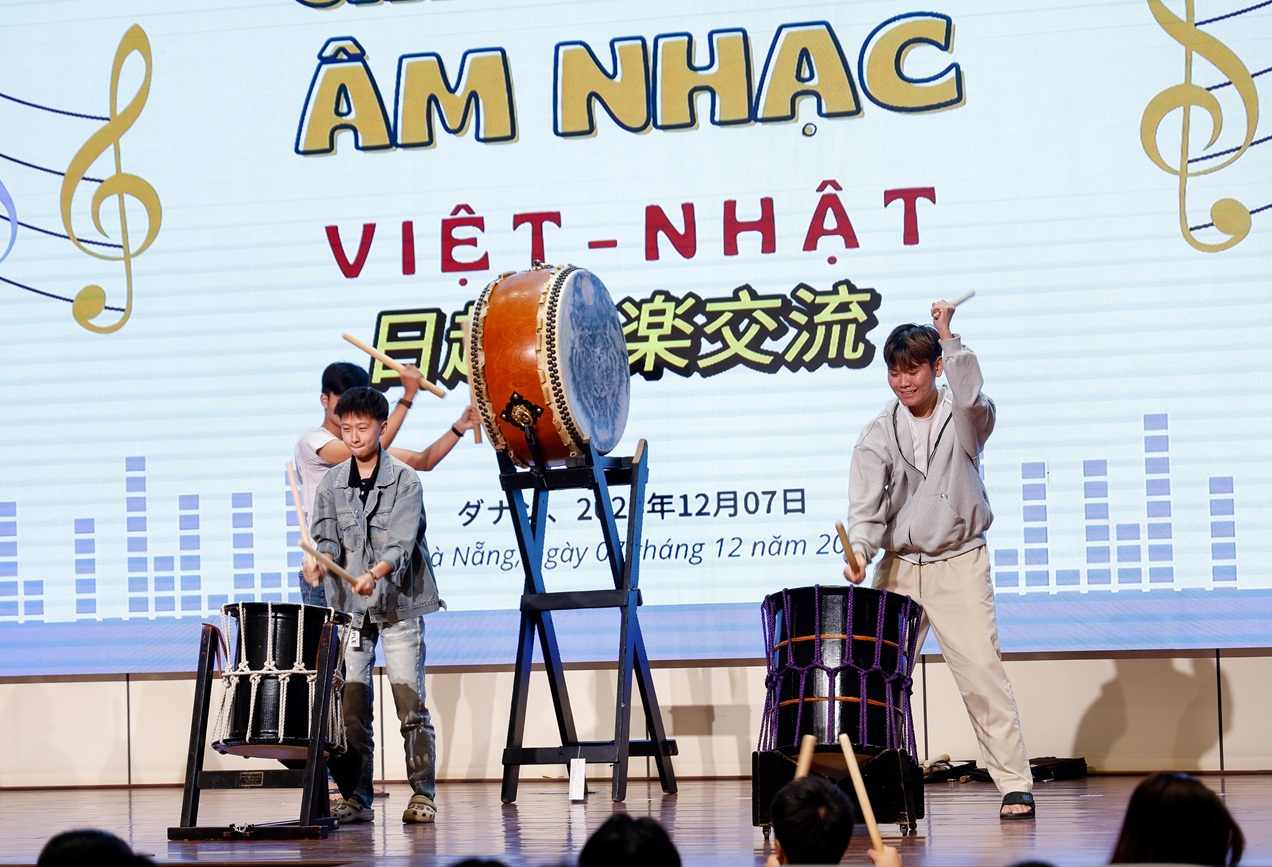
While language learning often occurs through textbooks, today's event offered a completely different approach: learning through experience. Through the traditional Japanese rhythms of Takeru drums, familiar Vietnamese melodies, and moments when students stepped onto the stage to interact with the artists, Japanese culture was no longer distant but vividly present right in the university environment.
A special aspect of this year's program was the harmonious blend of performance art and academic value. Students not only enjoyed the performances but also listened to explanations about the origins, spirit, and symbolism of Japanese drums—an art form demanding endurance, discipline, and high team spirit. These are precisely the qualities that the Japanese Language Faculty always encourages students to cultivate during their studies.
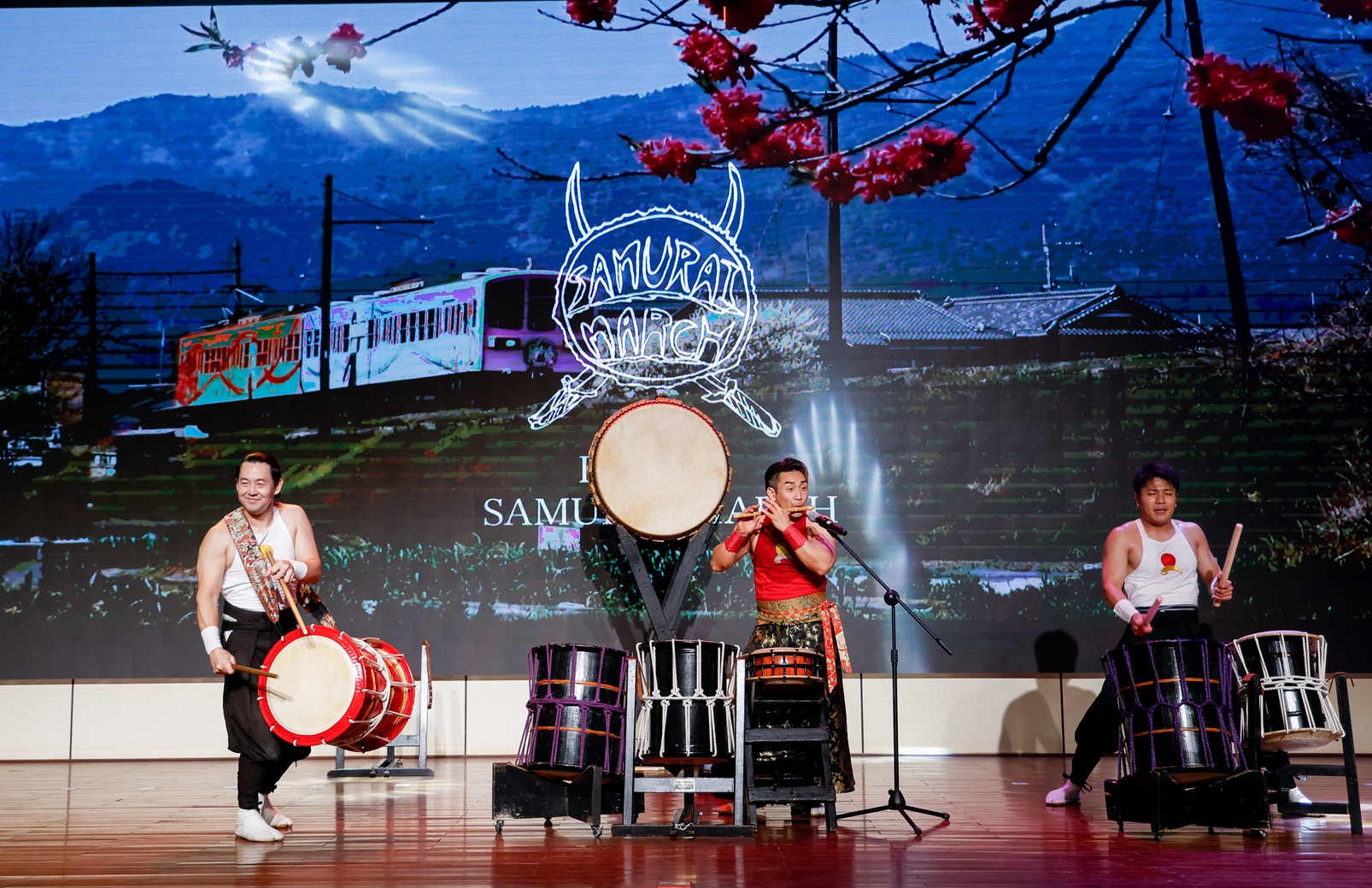
Another notable feature was how the program created opportunities for students to step out of their role as spectators. The moment when young students tried their hand at drumming, interacted with the artists, and together spread the passionate spirit of Japanese music transformed the hall into an open classroom, where skills and inspiration were exchanged naturally.
In the context of education moving towards internationalization, the Vietnam-Japan Musical Exchange program is a prime example of how ULSS and the Japanese Language Faculty implement international exchange activities in a systematic and pedagogically rich manner.
Thanks to events like this, students gain direct access to Japanese art, culture, and people—an opportunity not every training environment can provide. This is also the direction the Japanese Language Faculty is pursuing: combining language training with cultural immersion, expanding international interaction, and building a foundation for students to be confident in their future academic and career paths.