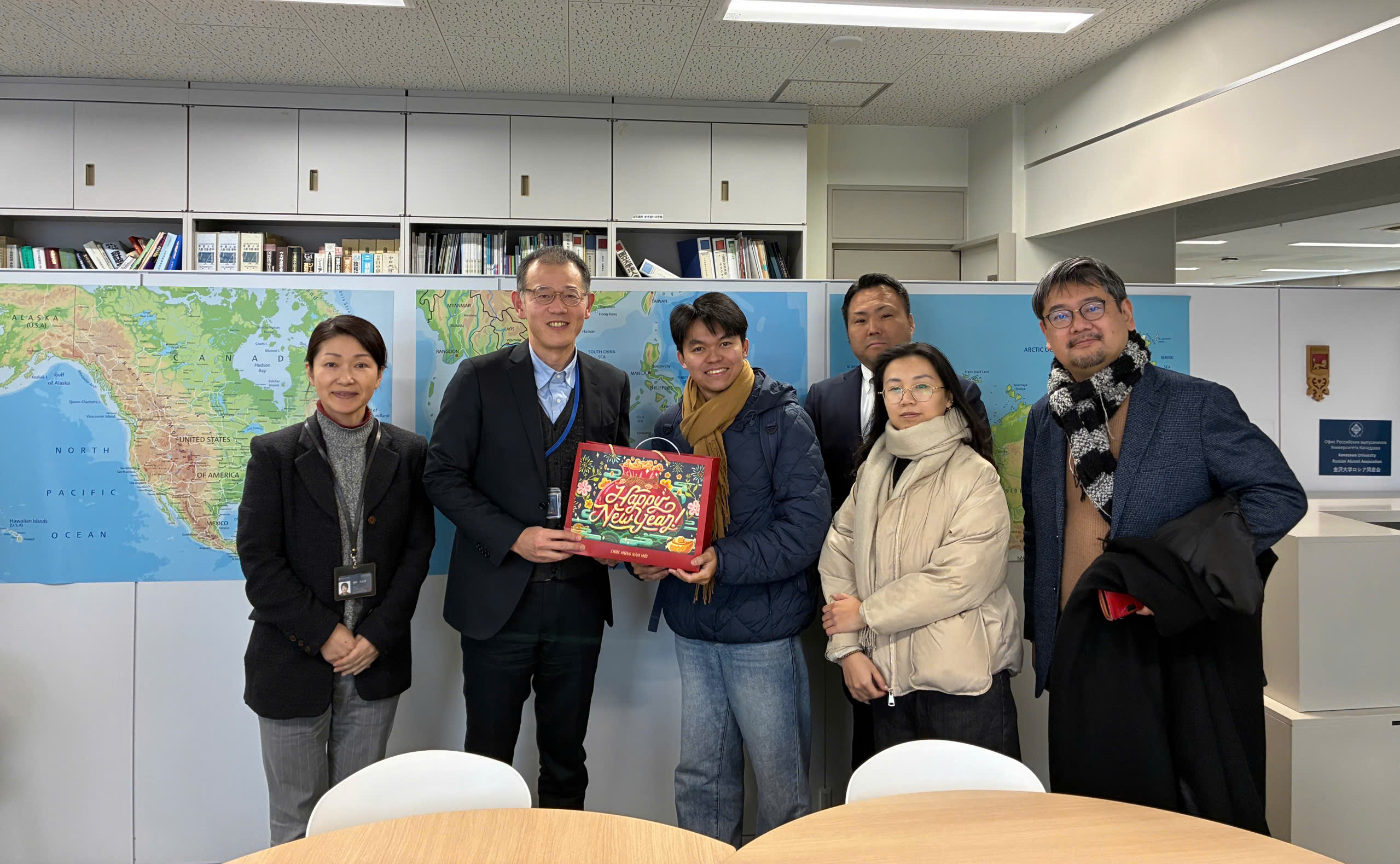
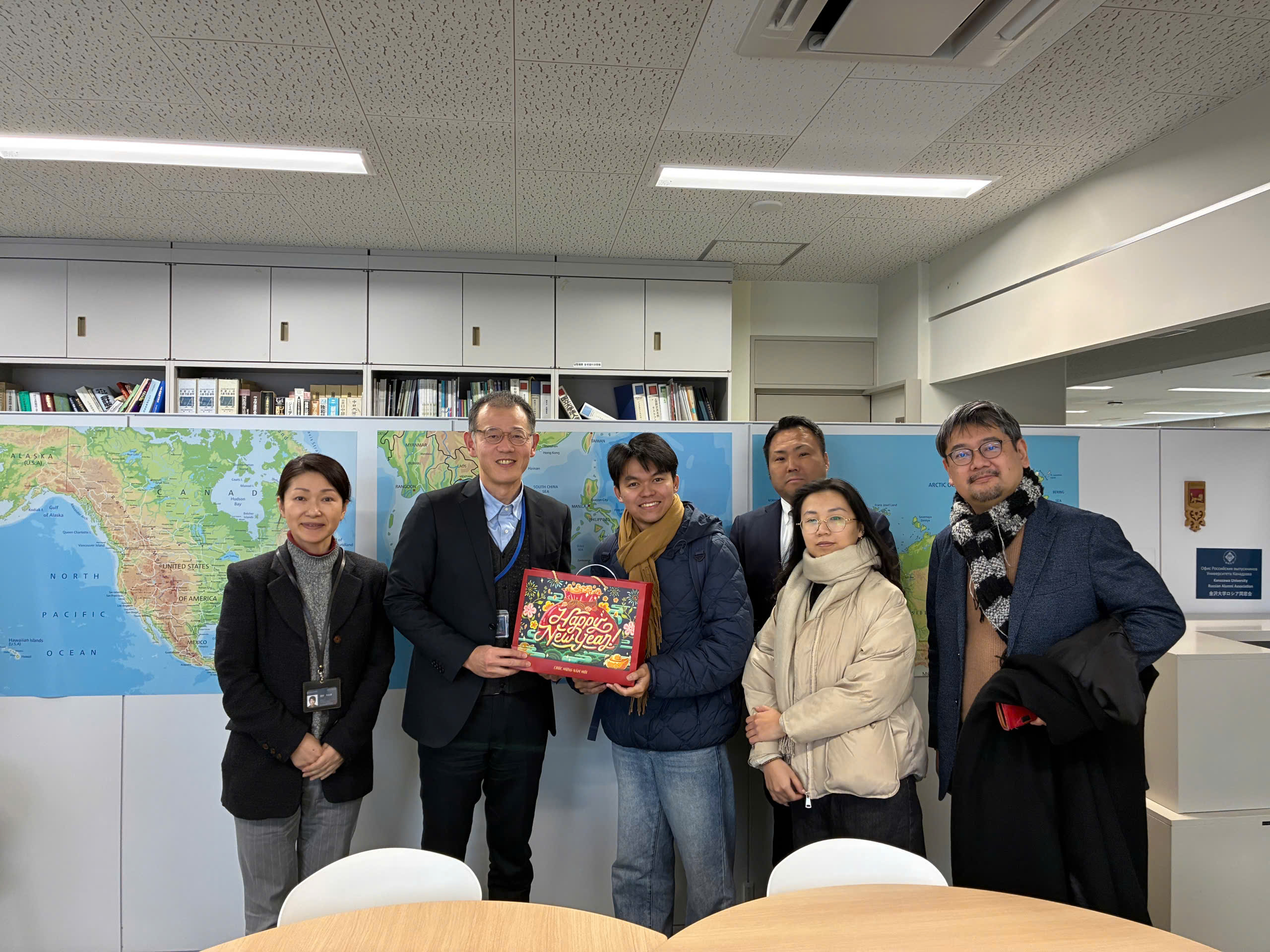
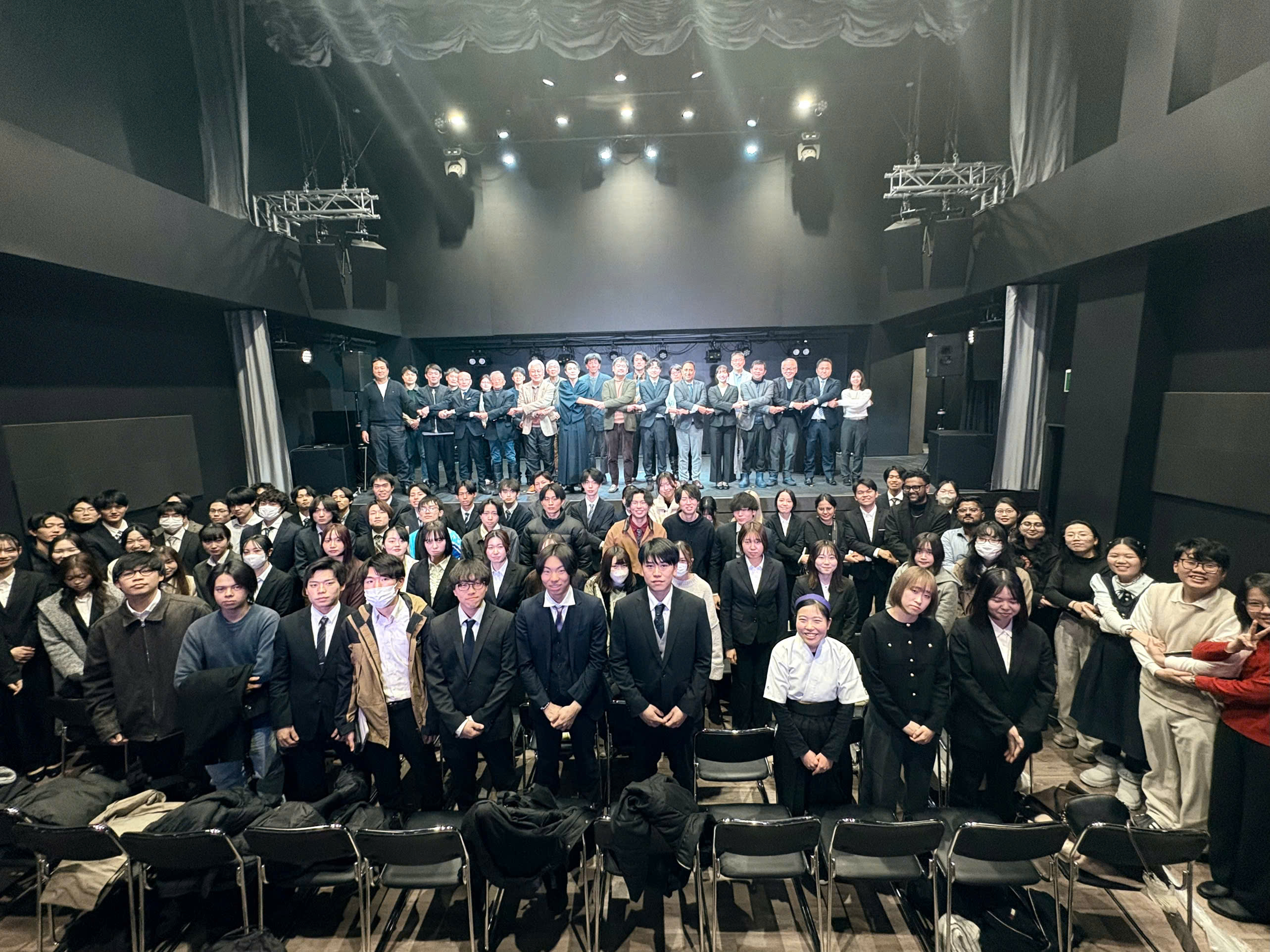
Within the framework of the sustainable cooperation between Duy Tan University and Kanazawa University, the "2x2 Internship Program," spanning 8 days (January 24-31, 2026), selected five of the university's most outstanding students to participate in the experience. Nguyen Tan Tri, a representative from the Faculty of International Relations & Public Relations, University of Languages and Social Sciences, excellently received the JASSO scholarship from the Japanese government, valued at 80,000 Yen, to support this practical internship.
In the ancient yet modern city of Kanazawa, Tan Tri, along with other international students, entered a challenging bilingual (English-Japanese) learning environment. Here, they not only studied theory but also directly participated in a series of "Hackathon" activities—where creative minds worked together intensively to find solutions for real-world problems faced by local businesses.
The defining feature of the "2x2 Internship Program" was its rigorous practicality. Tan Tri and his teammates had to confront two major challenges currently perplexing managers in Japan:
- Public Transportation Issues: Seeking solutions for the inability to expand bus networks in rural and suburban areas due to a severe shortage of drivers.
- Sustainable Tourism Development: Developing a model to attract tourists to lesser-known locations by combining it with Medical Tourism—a rapidly growing global trend.
Through the process of researching and developing business hypotheses, the second-year student demonstrated the sharp thinking of an International Relations major by connecting cultural, social, and technological factors to propose feasible recommendations.
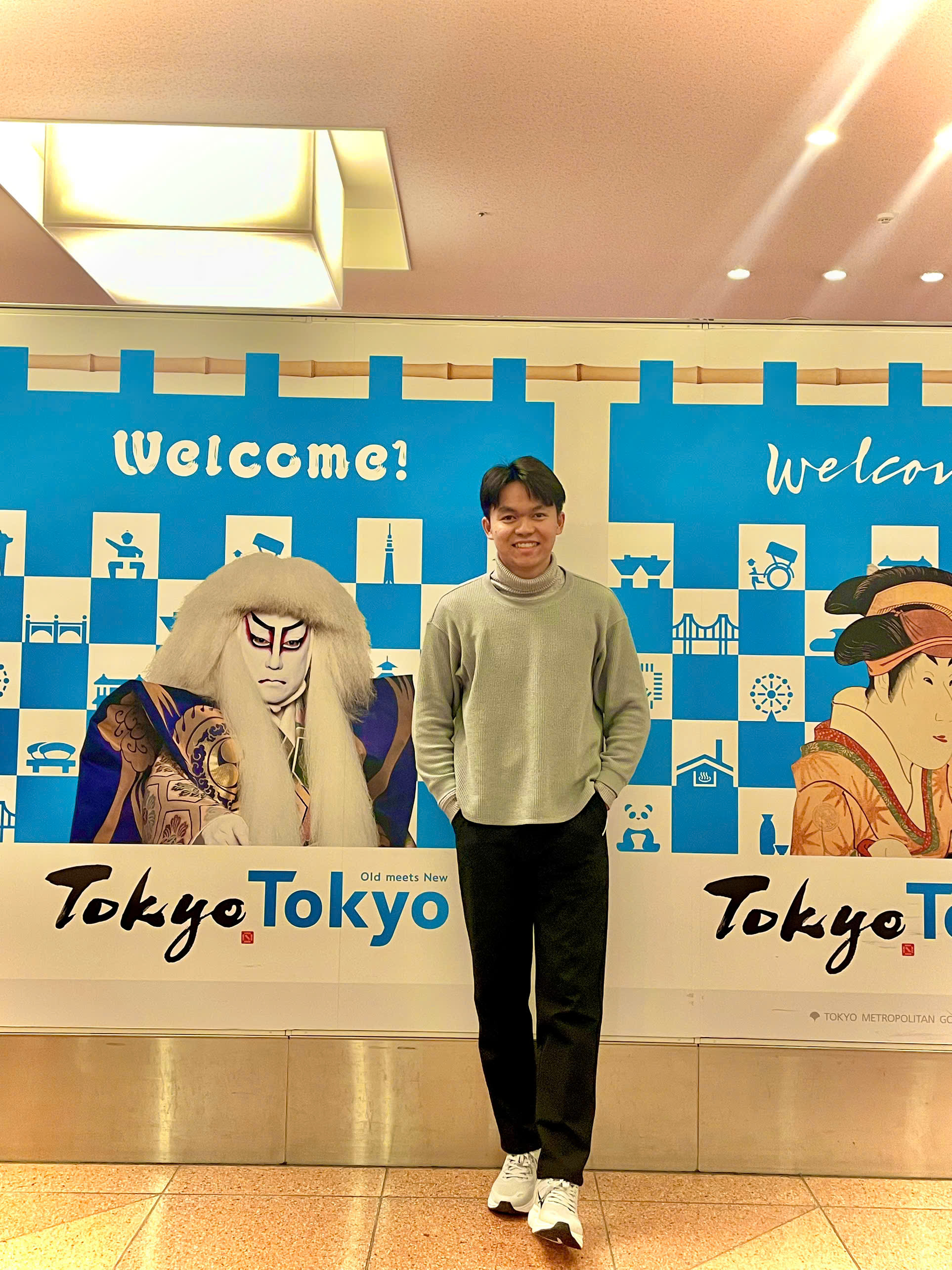
Although he had previously experienced five different cultures, the young man was still amazed upon arriving in Japan. Sharing his feelings, Tan Tri said: "I was truly overwhelmed by the extraordinary order and tranquility right in the heart of bustling Tokyo. The massive infrastructure, especially the modern subway system, felt like a parallel world existing underground."
His amazement extended beyond the scenery to the learning spirit of Japanese students. Tan Tri observed that Japanese students are equipped with very practical skills. All courses are linked to specific projects with high potential for new contributions and social change. A typical example was a project integrating artificial intelligence (AI) into wearable devices to assist nurses in recording patient histories and schedules—a profoundly humane technological application.
The journey not only brought knowledge but also helped Nguyen Tan Tri form profound insights about Vietnam's future. Tri observed that the issues Japan faces today, such as an aging population, social welfare burdens, and a shortage of young labor, are precisely the challenges Vietnam will need to address within the next 10 years.
"When Vietnam enters the phase of an aging population, we will no longer have the competitive advantage of cheap labor. What I have learned in Japan today will be crucial baggage for me and my generation to prepare sustainable solutions for the country," Tri shared.
Nguyen Tan Tri's journey at Kanazawa University stands as a brilliant milestone, affirming that students of the University of Languages and Social Sciences, Duy Tan University, are not only proficient in foreign languages and specialized knowledge but also possess strategic vision and a strong sense of responsibility towards the community.